Call MoldRemediation.io
Reach our 24/7 support center and tell us what you are seeing.
Black mold (Stachybotrys chartarum) is not a stain you can wipe away. It roots into damp drywall, gypsum, and other high-cellulose materials, and it keeps coming back until the moisture feeding it is fixed. The licensed, bonded, and insured local crews we connect you with contain the area, remove the affected material, treat what stays, and correct the water source so it does not return. Call our 24/7 support center and we will match you with a crew in your area.
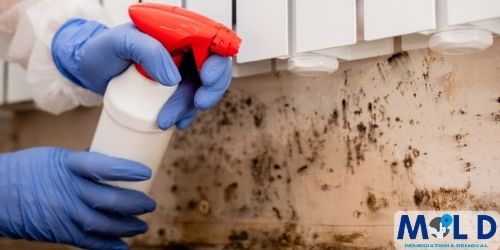
Black mold usually shows up dark, often greenish-black, with a damp or slimy look that turns powdery as it dries. It favors organic, high-cellulose surfaces such as drywall, gypsum board, ceiling tiles, and paper backing, and it spreads in a blotchy, irregular pattern.
Color alone does not confirm it. Several harmless molds look similar, and even Stachybotrys can appear green at certain stages, so the only way to know for certain is testing. If you can smell a persistent musty odor but cannot find the source, it is often behind drywall or under flooring.
Black mold takes hold wherever moisture sits, from a roof or plumbing leak, flooding, or steady condensation. Surface cleaning removes what you can see while the colony survives in the porous material and the damp behind it. Removal only lasts when the water source is fixed at the same time, which is the part most DIY attempts miss.
For most healthy adults black mold is more of a nuisance than an emergency, but it can aggravate breathing problems, headaches, and fatigue. The risk runs higher for infants, older adults, and anyone with asthma, allergies, or a weakened immune system. When growth is widespread or someone in the home is reacting, treat it as a job for a professional crew rather than a weekend cleanup.
A proper job is more than scrubbing. The crew seals off the affected area, runs HEPA air filtration so spores do not spread, removes the porous material that cannot be saved, treats the surfaces that stay, and dries the structure. Then they fix the moisture source and confirm the work before closing it back up. The full six-step process is below.
If you think you have black mold at home or at work, call our 24/7 support center. We will connect you with a licensed, bonded, and insured local crew that can assess the problem and start remediation, so you are not left guessing or breathing it in.
The same careful process on every job, from the first call to a thoroughly cleaned and sanitized space.
Reach our 24/7 support center and tell us what you are seeing.
A certified local technician assesses the mold and finds the moisture source.
We seal off the area so spores do not spread during the work.
HEPA filtration captures airborne spores while the crew works.
The mold is removed and the affected materials are treated.
We sanitize the space and share tips to keep mold from returning.
Wondering what it costs? Our mold remediation cost guide breaks down typical price ranges by severity.
Black mold (often Stachybotrys chartarum) can trigger coughing, congestion, throat irritation, headaches, and worsened asthma, especially in children, older adults, and anyone with allergies or a weakened immune system. Reactions vary a lot from person to person. If you're seeing dark, slimy growth and feeling symptoms that ease when you leave the house, treat it seriously and get it inspected.
A small spot on a hard, non-porous surface like tile can sometimes be cleaned with soap and water and proper protective gear. Anything larger than about 10 square feet, or mold that's soaked into drywall, carpet, or insulation, calls for a professional, because disturbing it sends spores through the air. DIY attempts on porous materials often leave roots behind and spread the problem. The crews we connect you with use containment and air filtration to remove it safely.
Black mold removal usually costs more than standard mold work because of the extra containment and protective steps involved. Expect figures on the higher end of the $15 to $30 per square foot range, with whole-area projects often landing between $2,000 and $6,000 depending on spread and location. The independent provider you're matched with will give an exact quote after inspecting the site.
Common signs include a persistent musty smell, dark staining or bubbling paint, warped drywall, and allergy-like symptoms that flare indoors. Past water damage or plumbing leaks in that wall raise the odds. You can't confirm it without opening the wall or running moisture and air testing, which is what a professional inspection covers.
Mold spreads within days and damages both air quality and the materials around it. Call now or request a free inspection, and a certified local crew will take it from here.